
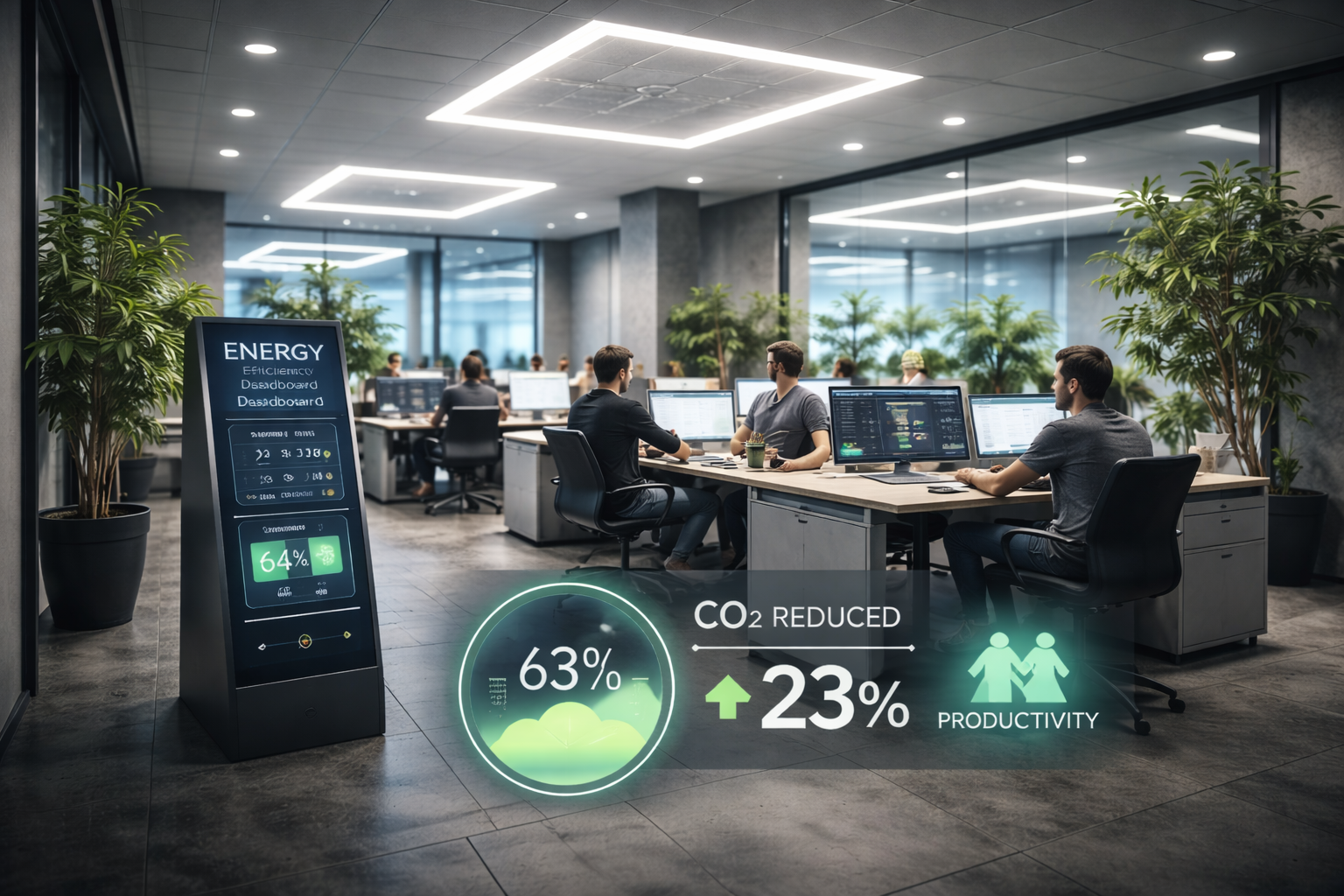
When companies invest in LED upgrades, they often focus first on energy cost savings. But modern smart LED 2.0 lighting delivers benefits far beyond monthly utility bills. From productivity boosts to environmental impact and alignment with sustainability goals, smart lighting technology is reshaping how businesses think about their facilities.
Lighting and Productivity
Studies show that improved lighting quality can:
- Increase employee focus
- Reduce eye strain and fatigue
- Improve mood and workplace satisfaction
In poorly lit environments, workers may struggle to concentrate, leading to lower productivity and higher error rates. Smart LED 2.0 solutions offer customizable brightness and color temperature that optimize visual comfort and support better performance.
Enhanced Safety and Compliance
Many industries require specific light levels for safety and regulatory compliance. Smart LED controls ensure:
- Correct lighting levels at all times
- Immediate adjustments when conditions change
- Alerts when fixtures require maintenance
This minimizes risk and prevents costly safety incidents.
Sustainability and ESG Goals
Environmental, Social, and Governance (ESG) performance matters more than ever. Upgrading to smart LEDs can help:
- Reduce carbon emissions by up to 60% or more
- Lower overall energy usage
- Support sustainability reporting
Many companies now include lighting upgrades as a key component of their net‑zero strategies.
Integration with Building Systems
LED 2.0 isn’t just effective, it’s connected. Smart lighting integrates with overall building management systems (BMS) and IoT platforms, enabling:
- Automated schedules tied to occupancy and usage patterns
- Centralized control from mobile or web apps
- Data export for energy audits and benchmarking
This connectivity makes smart lighting a strategic asset, not just infrastructure.
Future Trends in Smart Lighting
As technology advances, expect features such as:
- AI‑driven adaptive lighting: adjusts in real‑time with machine learning
- Predictive maintenance: smart detection of failing components before they break
- Enhanced sensor fusion: combining lighting with environmental and occupancy data
These innovations further extend value beyond cost savings and align with cutting‑edge facility management.
Conclusion
Smart LED 2.0 lighting is more than a utility expense reduction, it’s a performance accelerator and sustainability enabler. With measurable productivity benefits, safety enhancements, and strong alignment with ESG goals, smart lighting is now a critical part of any forward‑thinking business strategy.

